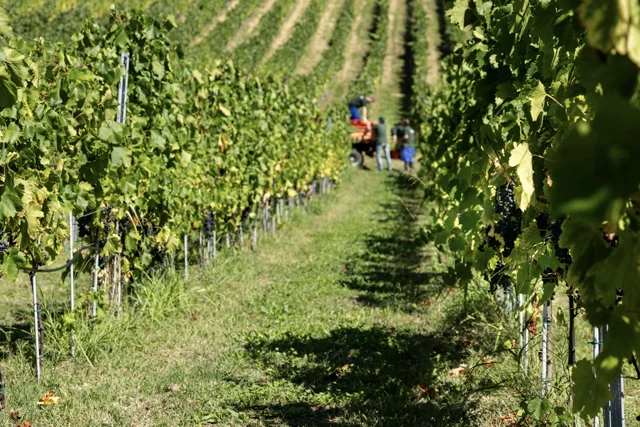
Harvest in the Vineyards of Vitus Winery
In Zagorje, harvest has never been only a task or an obligation. It has always been part of the rhythm of the year: the moment when the work of the entire season finally becomes visible on the vine, when the vineyard reveals what it has been quietly preparing since spring, but also a social occasion that brings together friends, family, and neighbours in shared work - always with a shared meal and refreshment close at hand.
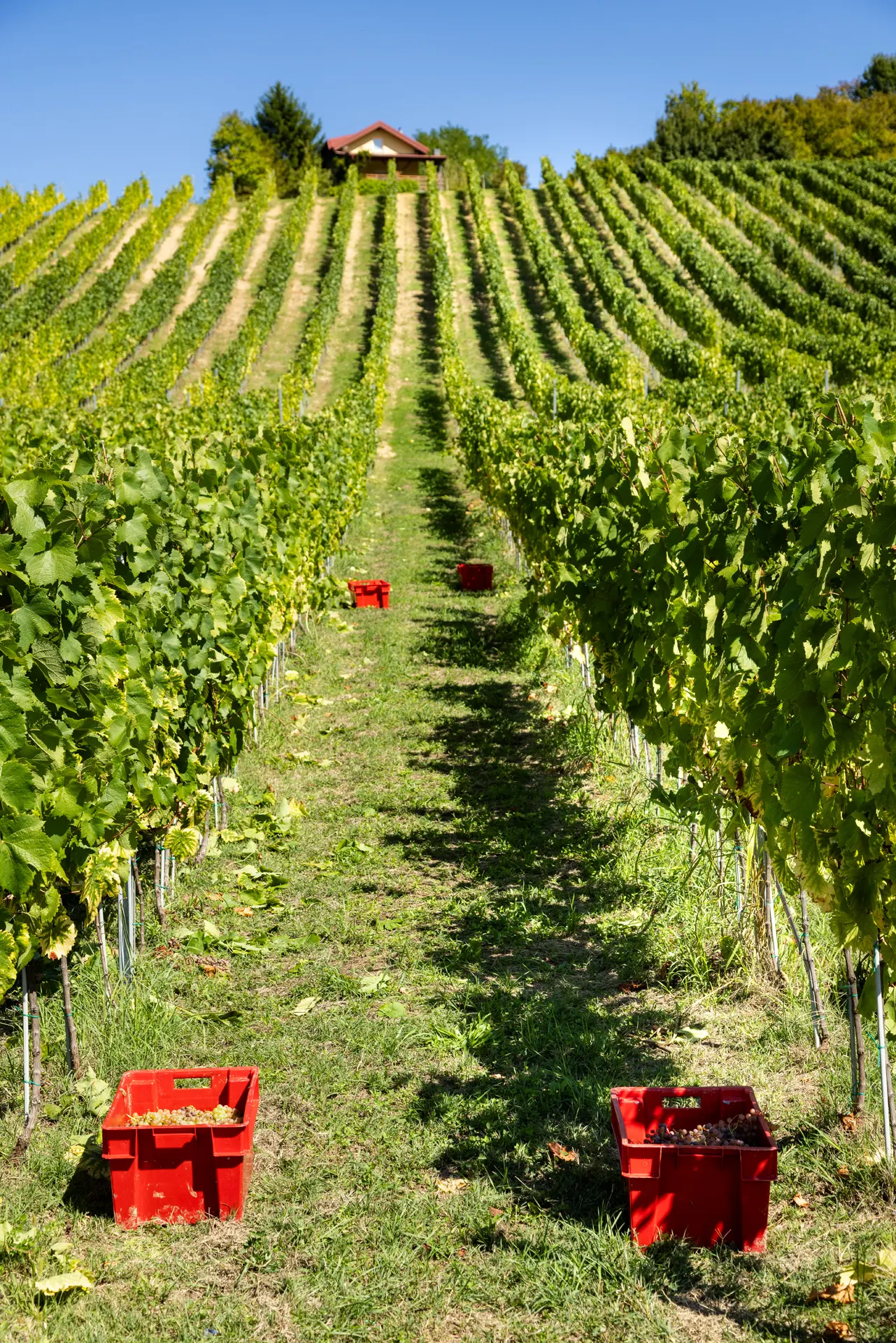
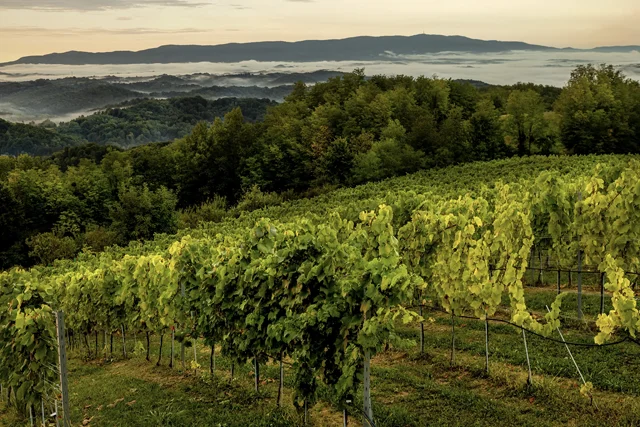
At the Vitus Vina estate, harvest lasts several weeks, but preparation for it lasts all year. The grapes that have grown on the slopes above Sveti Križ Začretje - pruned, tied, thinned, and protected from disease, finally reach their defining moment in September, when the true character of the year begins to show. For us, this is the liveliest and most uncertain time of the year, because no matter how much we prepare, the vineyard always has the final word.
And there begins what makes harvest at Vitus different from most: we harvest varieties that almost disappeared. Belina starohrvatska, Volovina crvena, Modra kosovina, Dišeća ranina - each has its own story, and each ripens in the vineyard at its own pace. There is no single harvest date. There are as many beginnings as there are varieties and vineyard sites.
Waiting for the Right Moment
In the weeks before harvest, the vineyard is visited every day. Sugar levels are measured, acidity is monitored, and the sky is watched closely. Harvest does not begin on the same date each year - it begins when the grapes are ready, and each year decides that for itself.
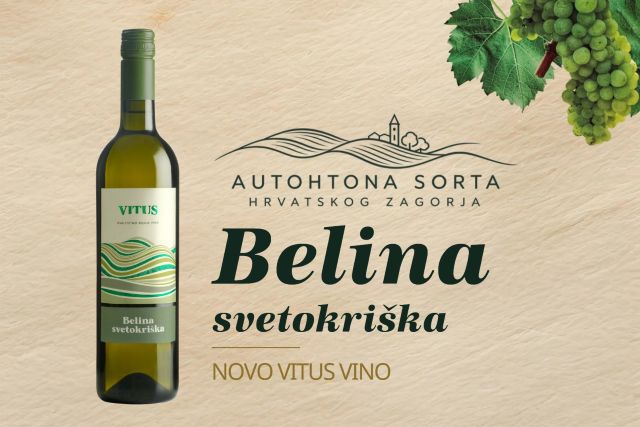
With Belina, this means waiting for the moment when freshness and ripeness come into balance: not too early, because the wine would remain thin; not too late, because it would lose the lively acidity that gives it character. Throughout the season, yield is deliberately reduced, even though Belina itself would produce considerably more grapes. Our oenologist Mladen Kantoci insists on lower yields, because that is what brings concentration and quality to the glass. Volovina crvena and Modra kosovina wait longer. Red varieties need more sun and patience to develop full structure, while Modra kosovina, the most demanding among them, is harvested last. Sometimes the right moment is a matter of one or two days, and sometimes of a single foggy morning that changes everything.
Hands, Not Machines
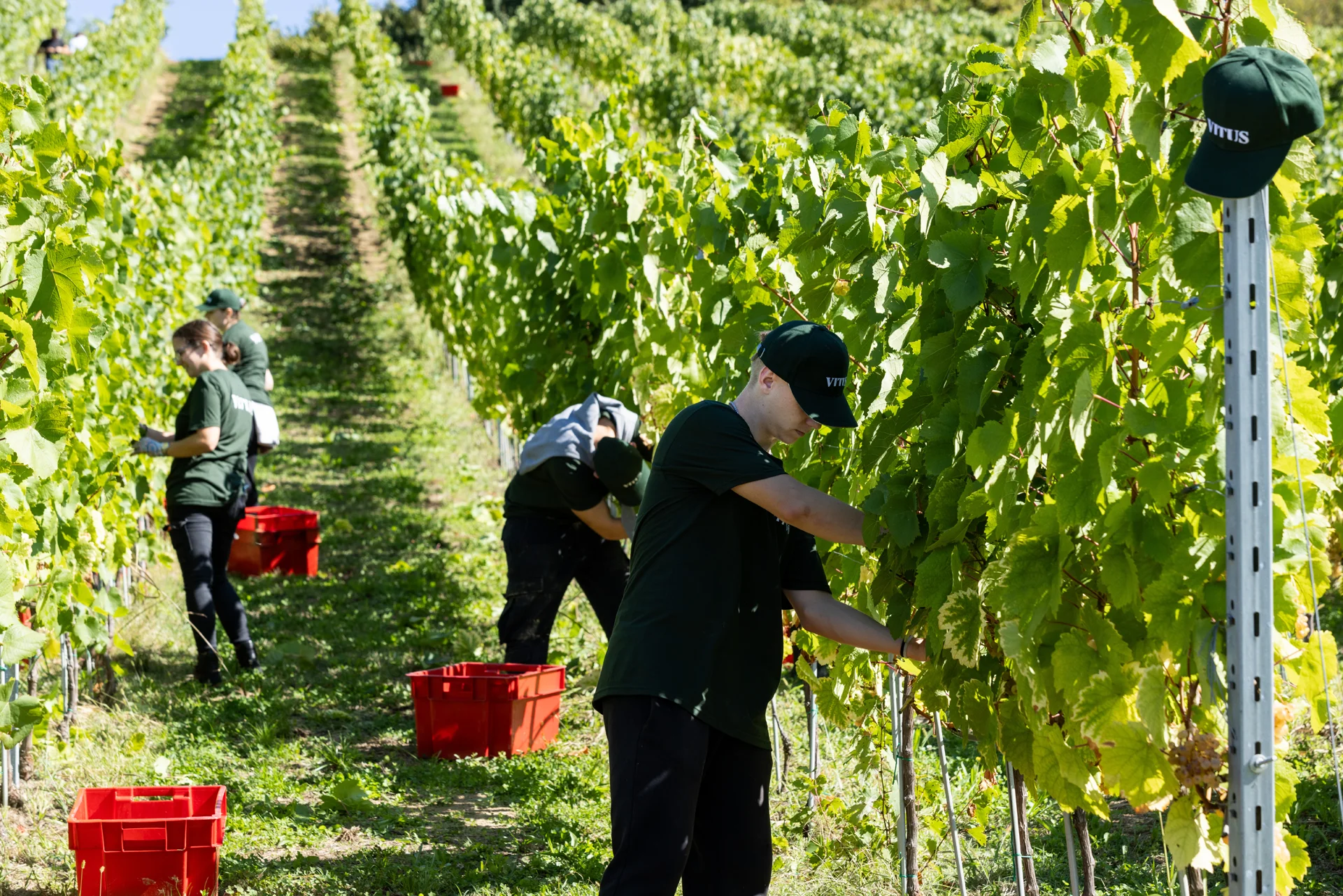
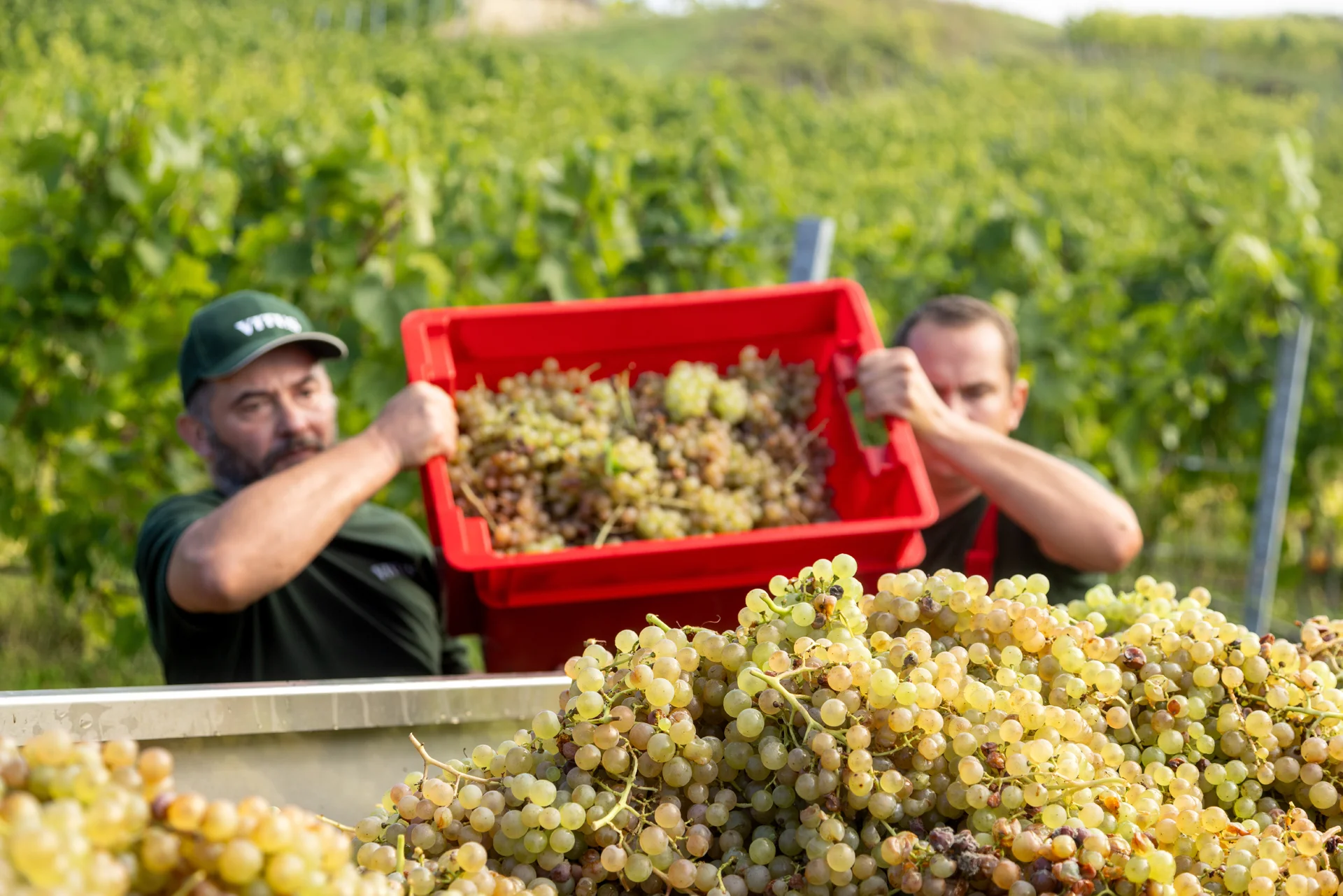
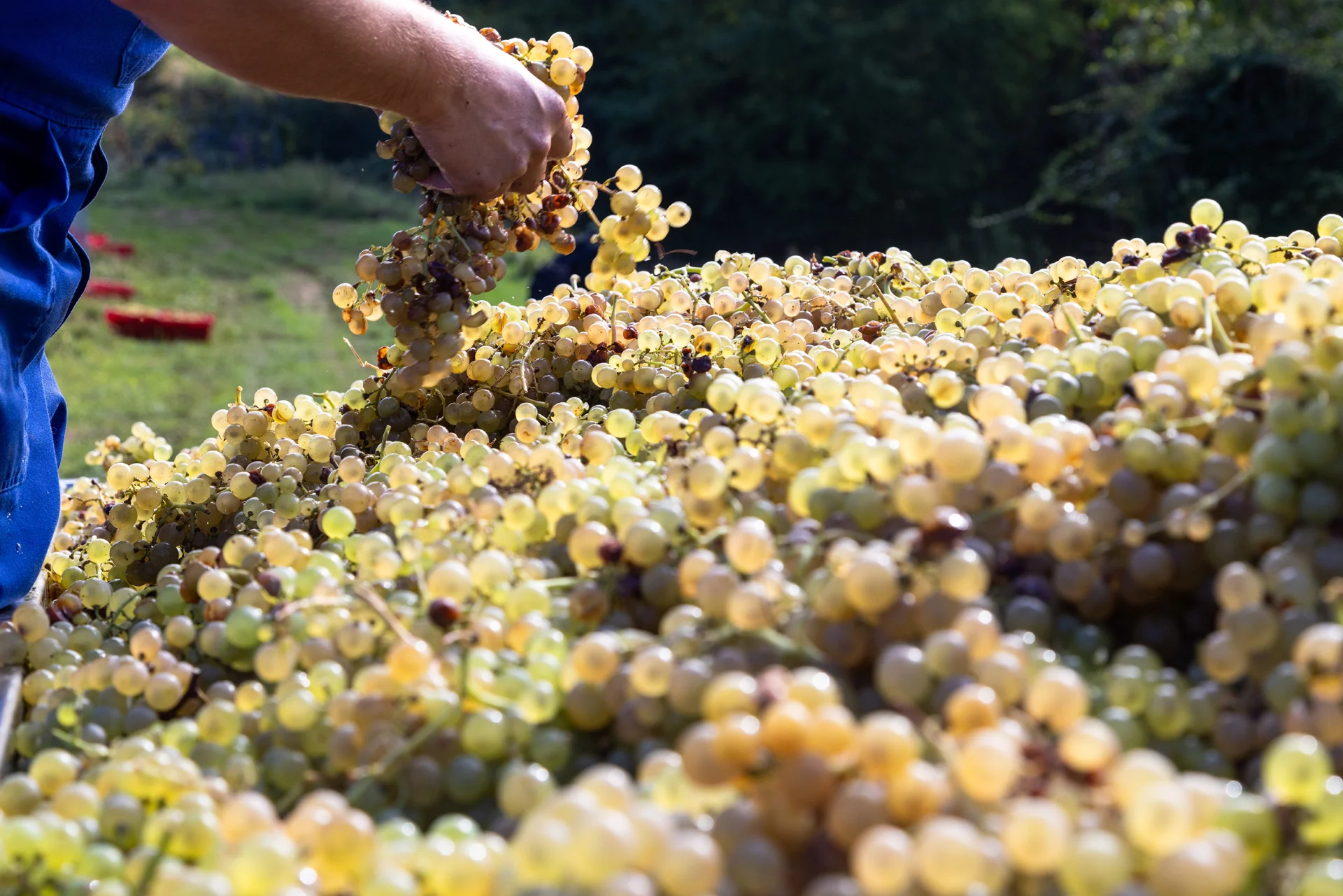
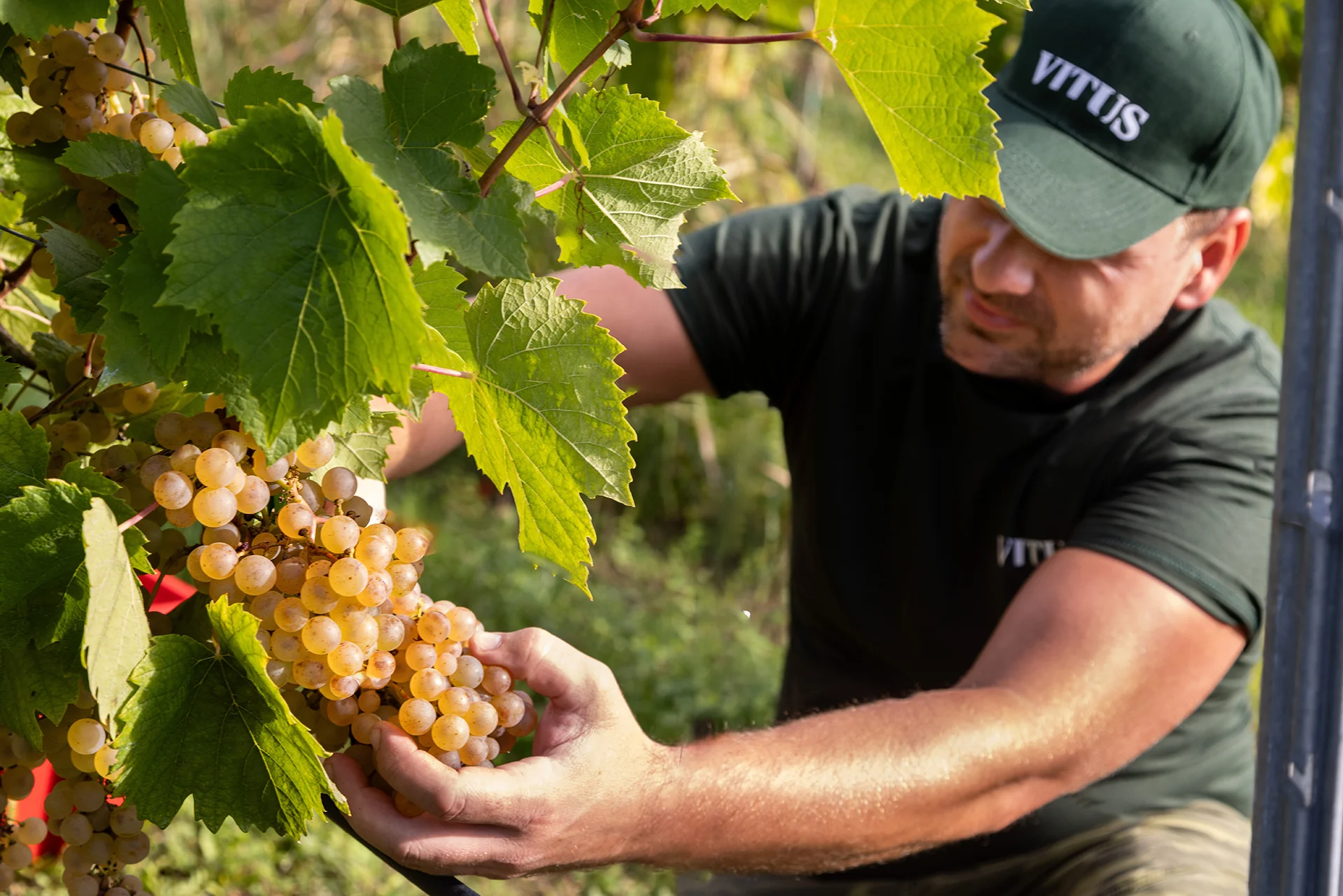
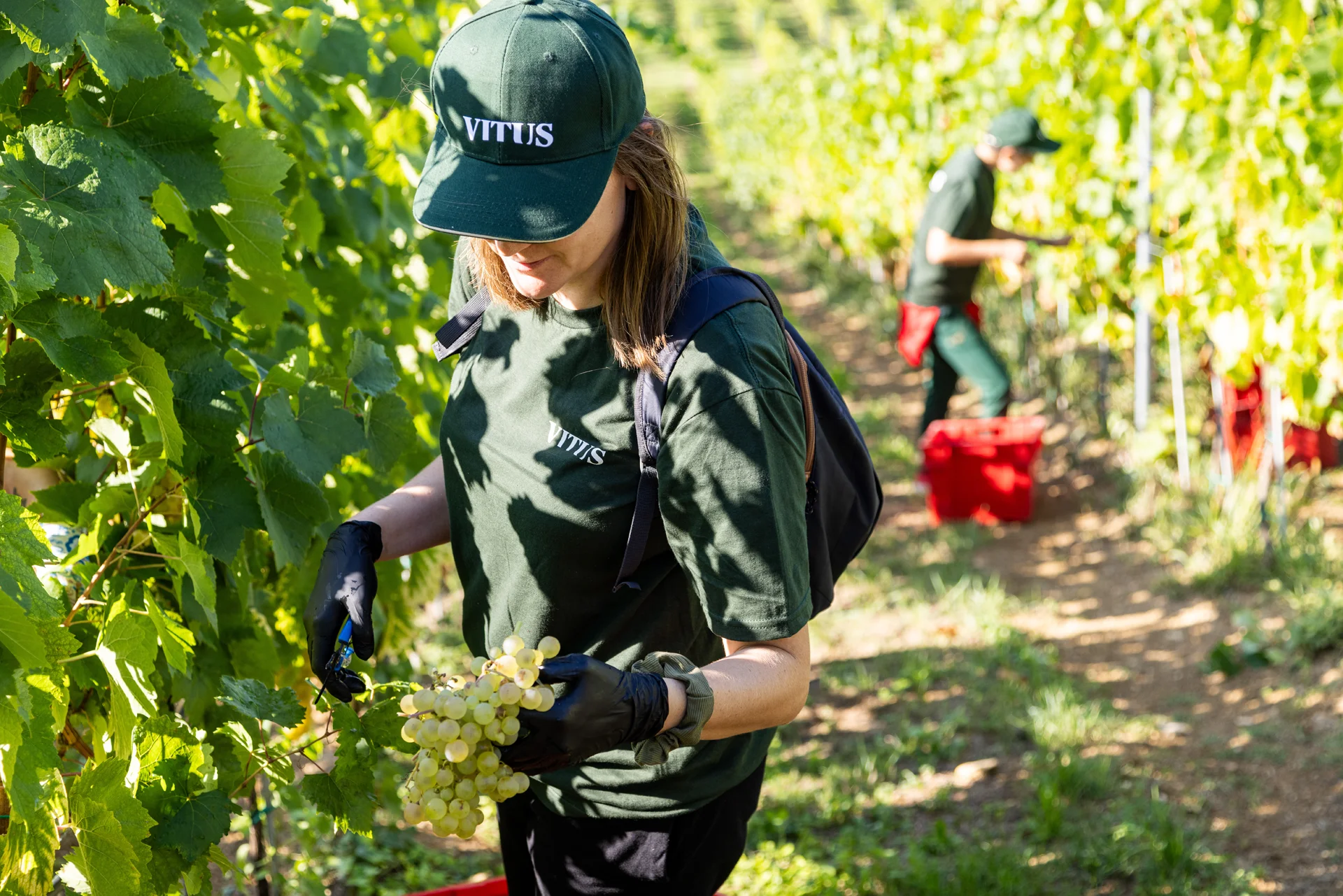
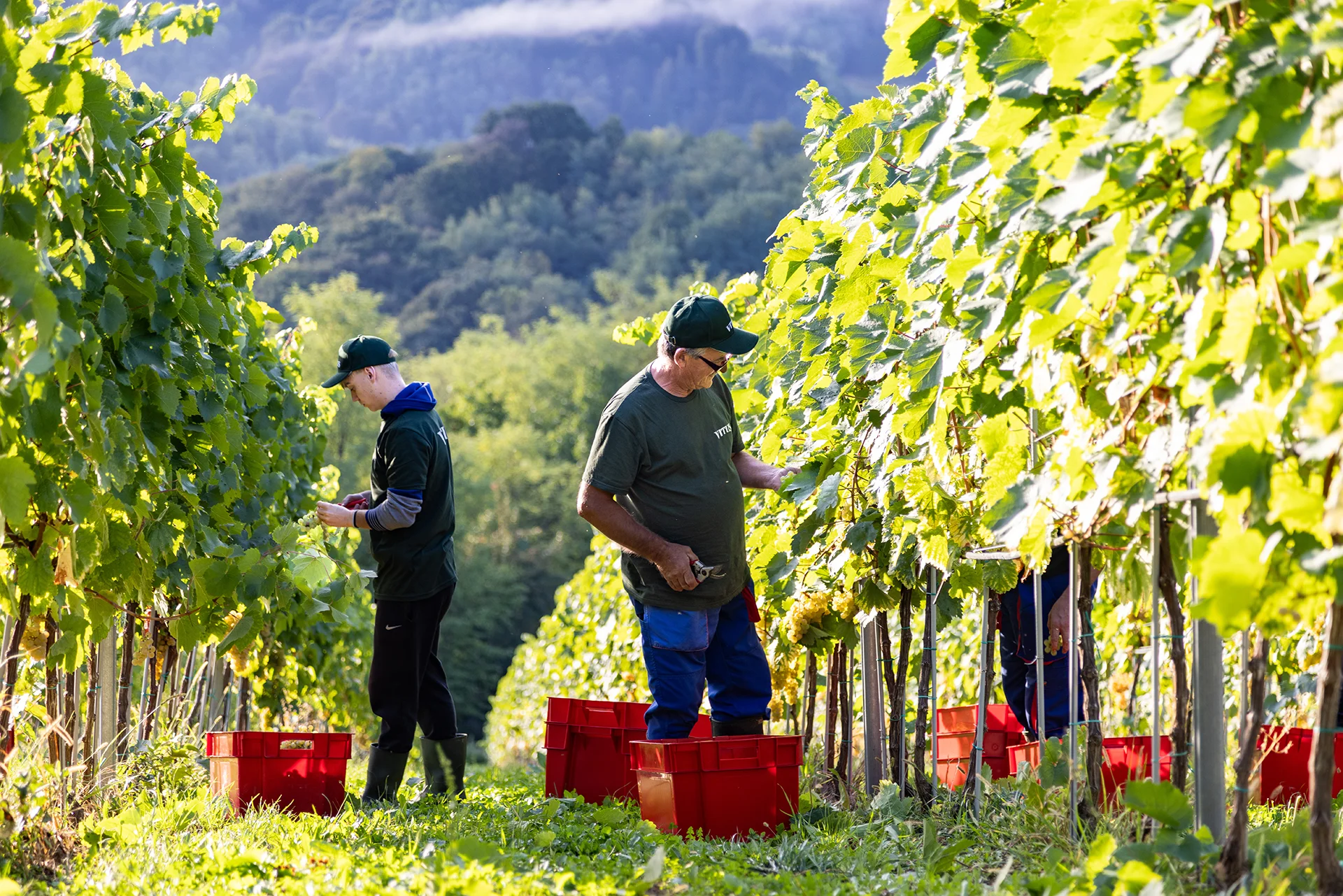
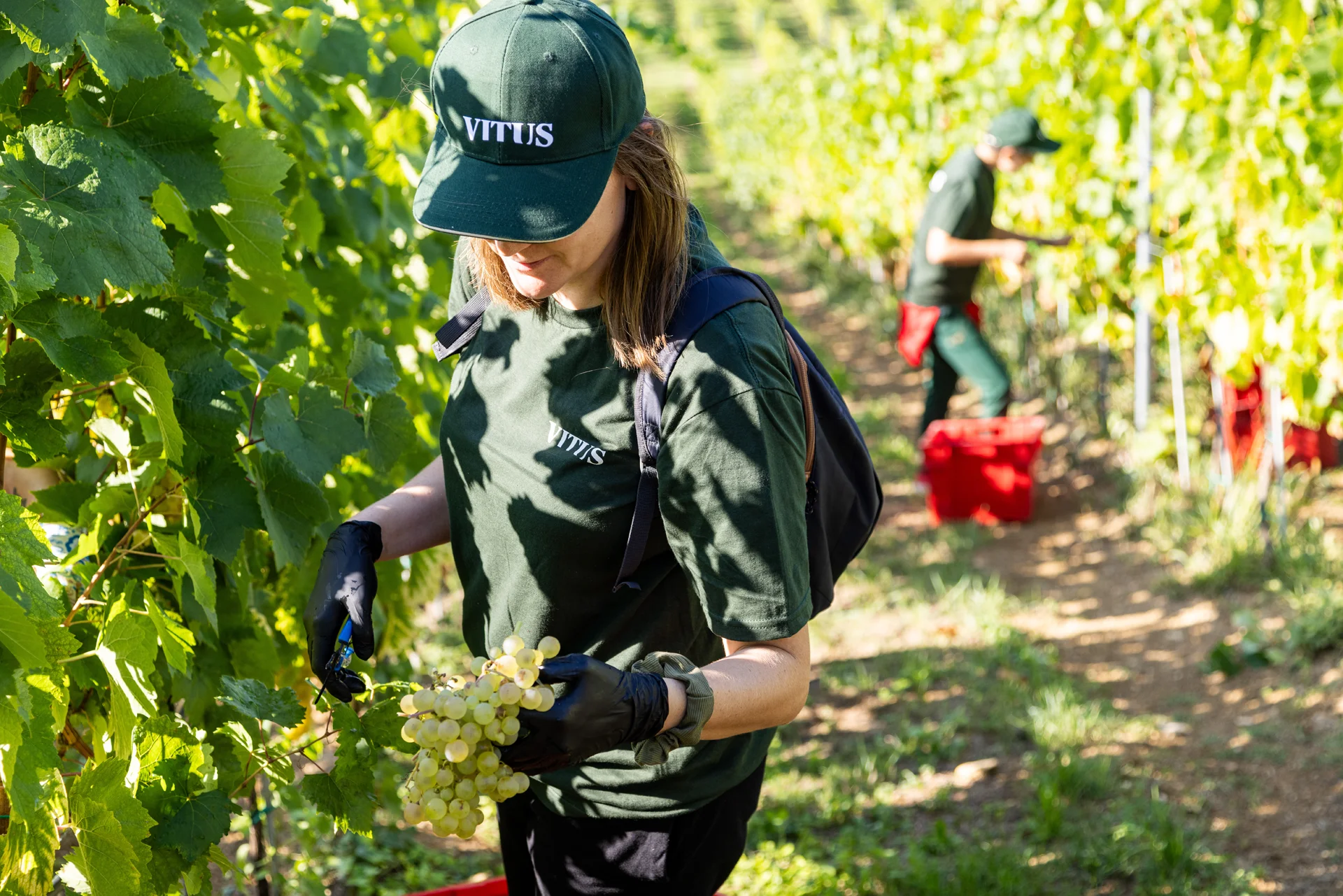
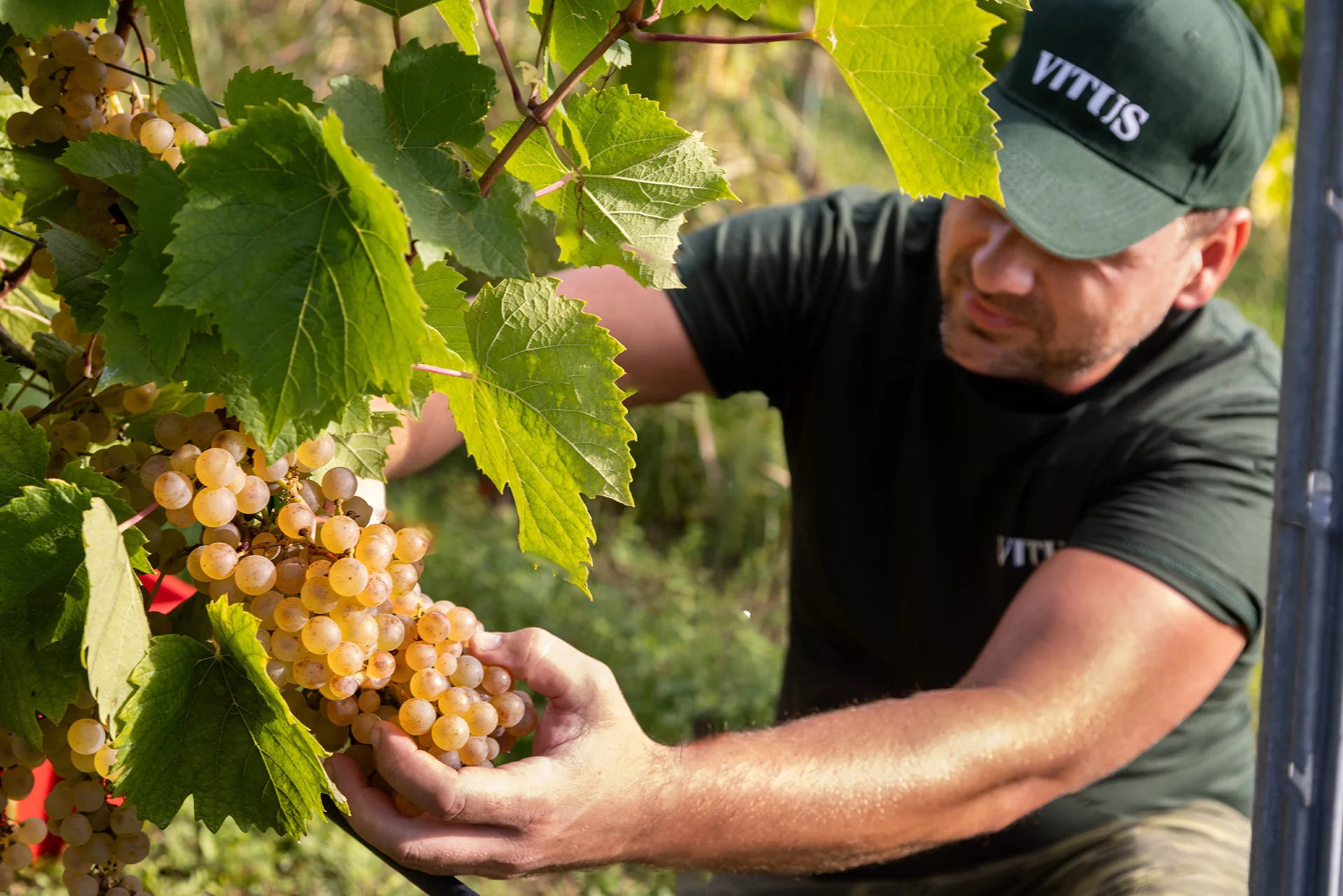
We harvest the grapes without mechanisation, so every bunch passes through the hands of the harvesters. This means that the grapes arriving in our wine cellar are exactly as we wanted them picked: undamaged and fresh. It is slower and more demanding, but we believe the indigenous varieties from our vineyards deserve that care - and the difference can be felt in the glass.
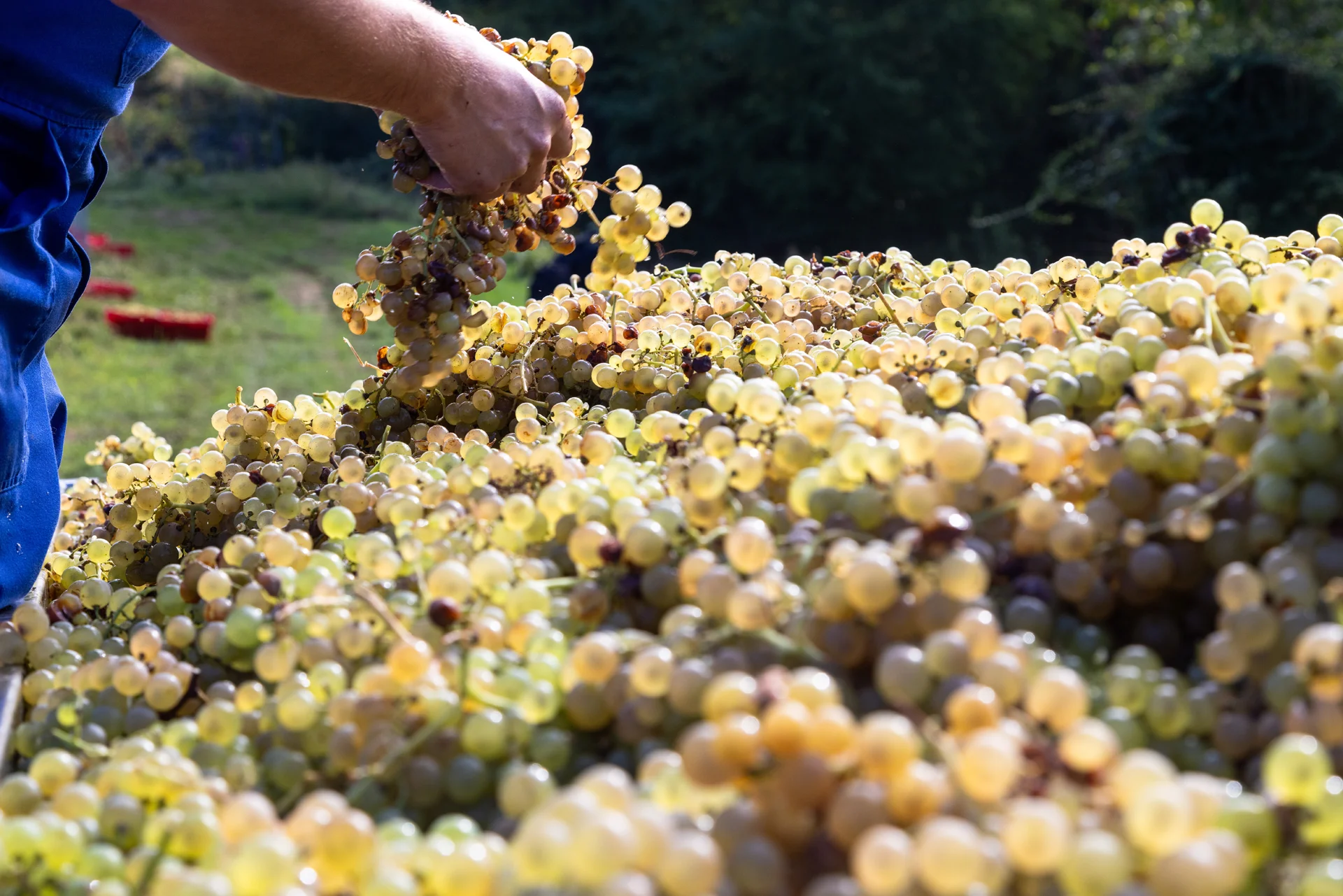
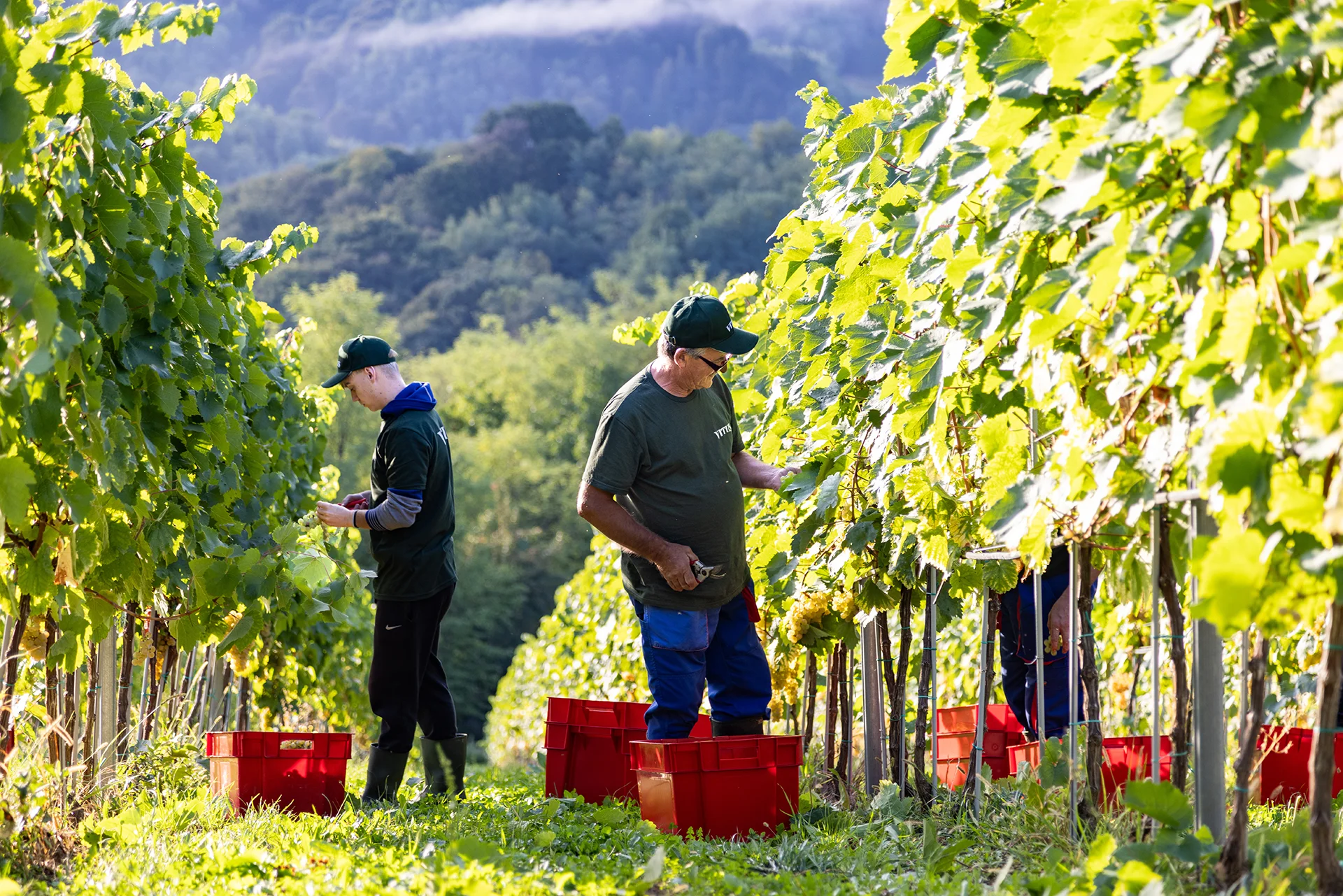
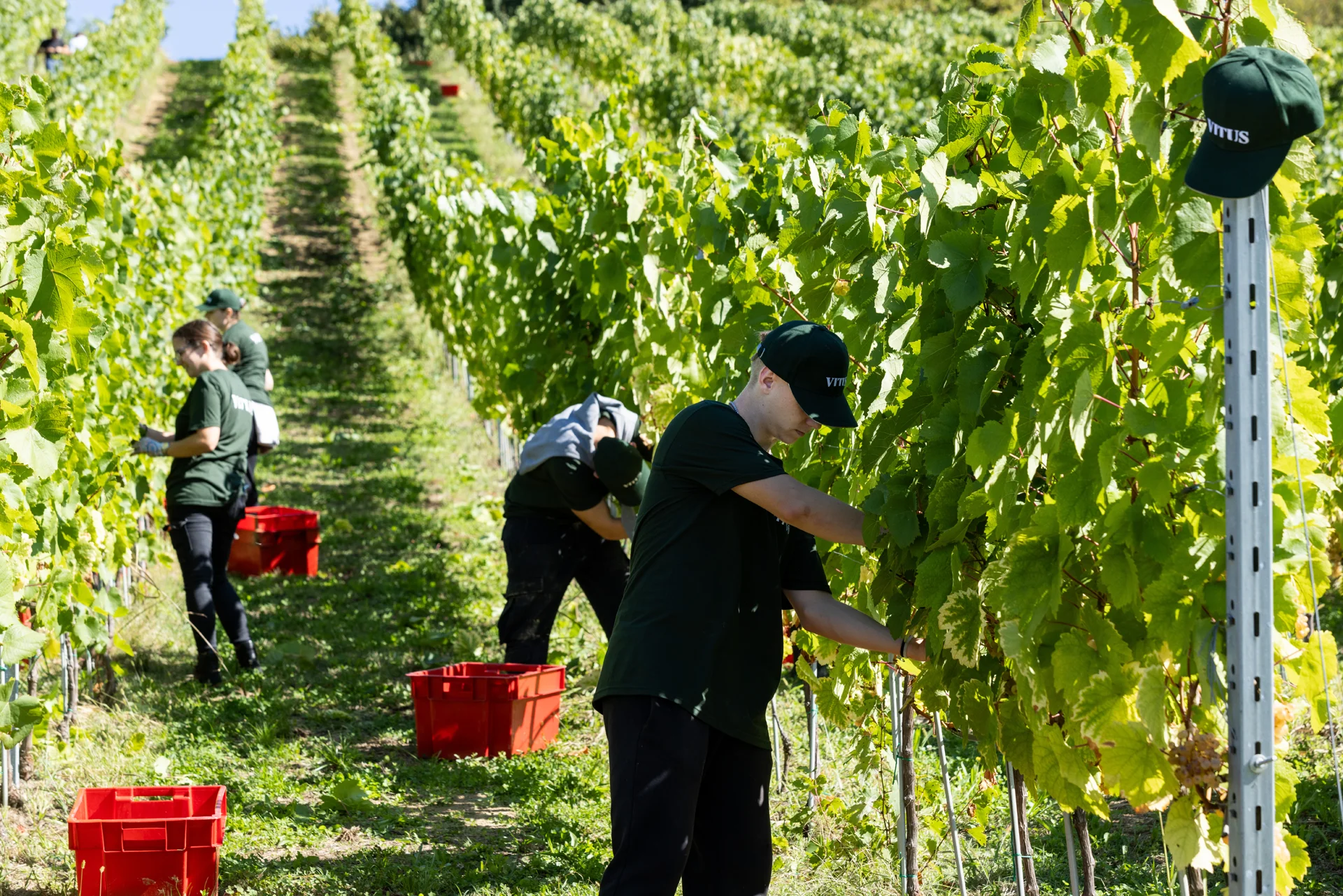
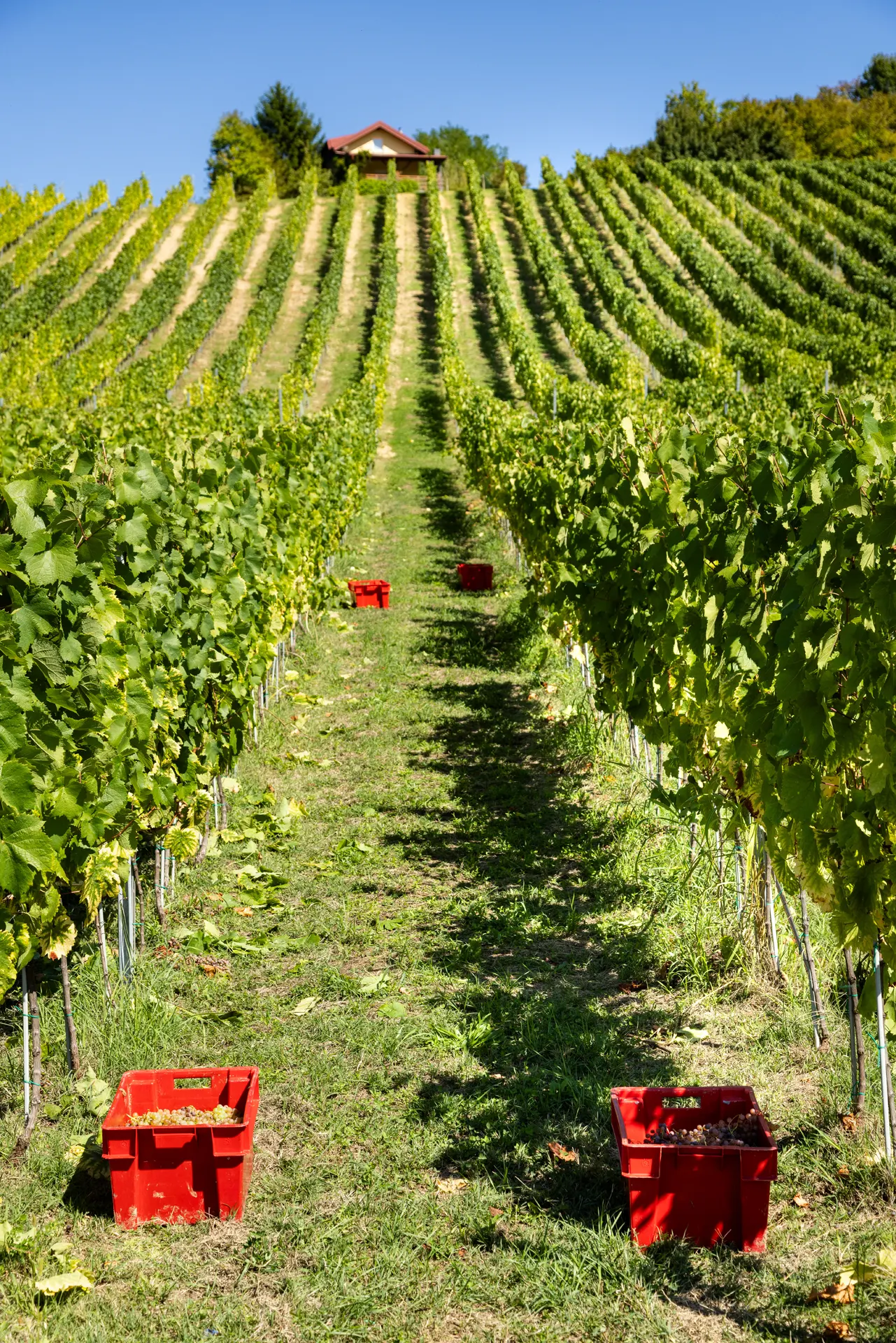
Harvest in Zagorje was never really a mechanised job anyway. On steep plots, among rows that follow the slope of the land, a machine would have no place even if we wanted one. Harvesters move from vine to vine, filling crates, and the grapes are brought to the cellar the same day. Between vineyard and press, hours pass, not days.
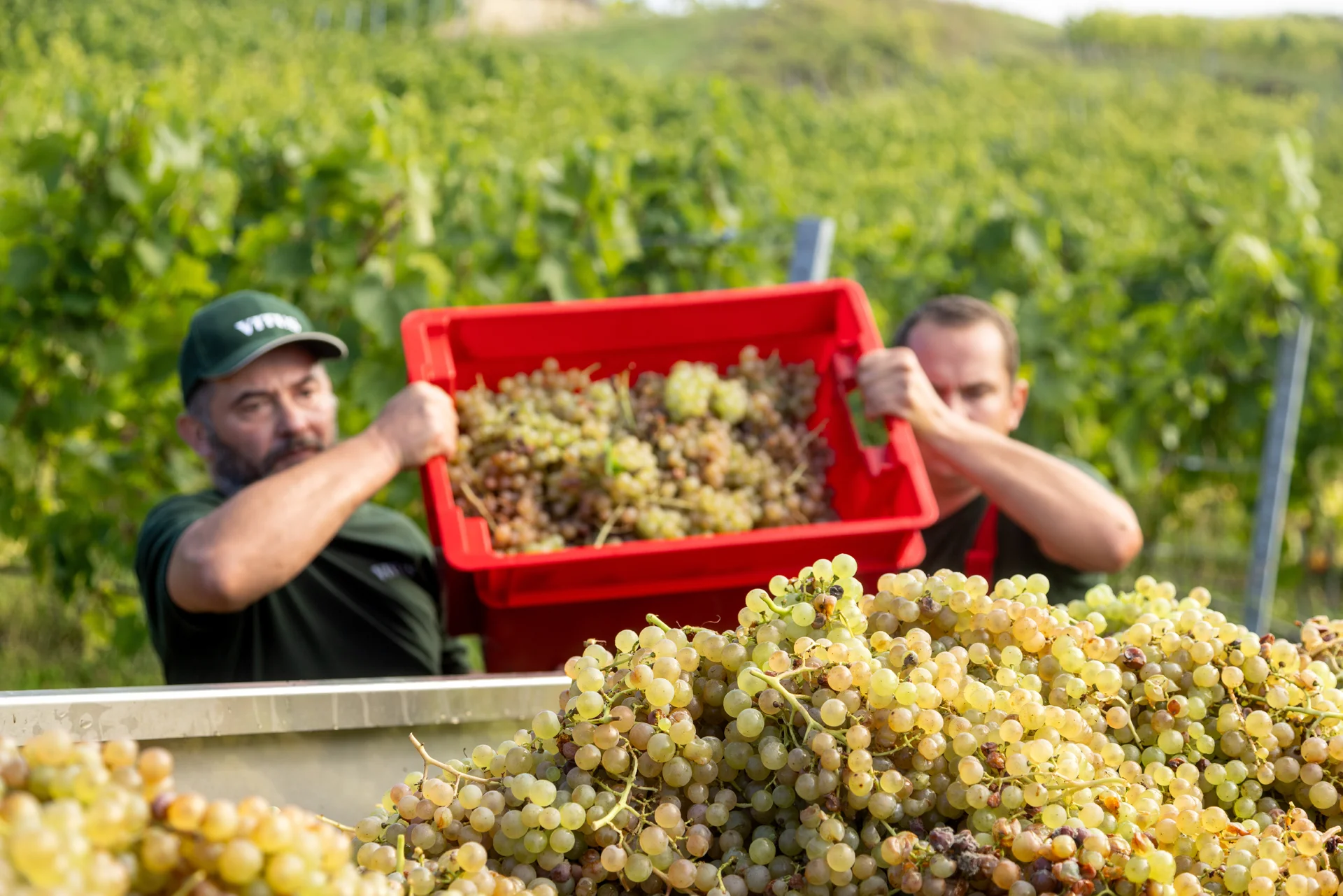
When you come to Vitus winery during harvest, you will see that it is not the quiet, polished process often imagined from promotional photographs. It is busy, tiring work, with morning dew on your hands and late-afternoon sun on your back. But it is also conversations between the rows, shared breaks, and the feeling that the work has meaning - because varieties that nearly disappeared now once again have people to harvest them.
From Vine to Cellar
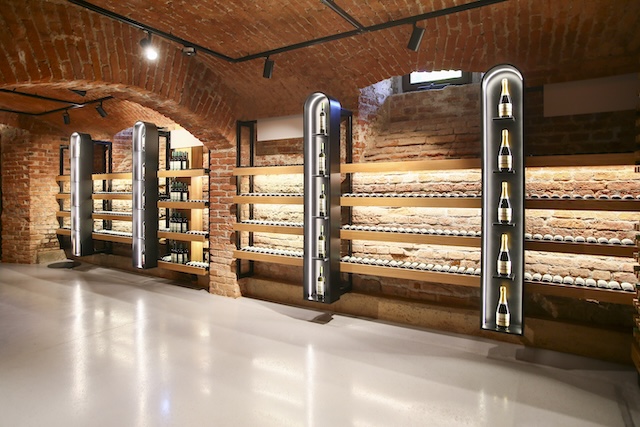
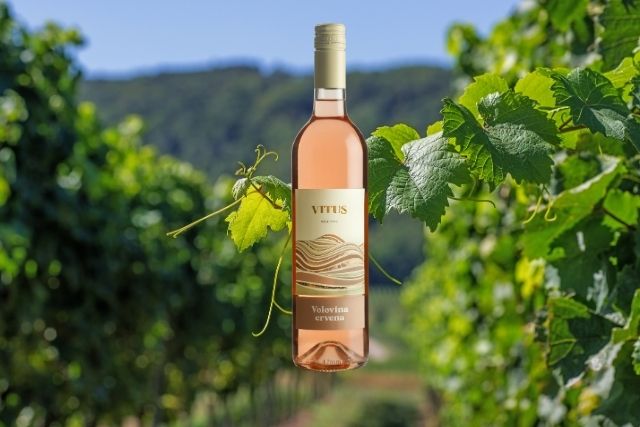
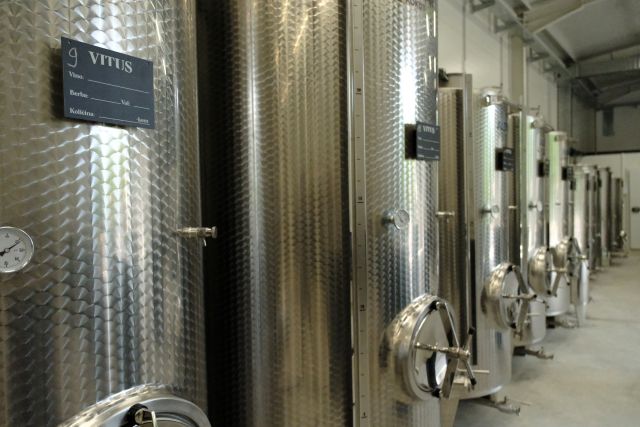
In the cellar, the second part of the story begins, and it begins quickly. White varieties, Belina starohrvatska and Dišeća ranina, undergo gentle pressing to preserve freshness and finesse. Modra kosovina is macerated with its skins, which gives it structure, colour, and tannins before it begins ageing in barrique wine barrels. Volovina crvena, as a rosé, has only brief contact with the skins, just enough to gain its recognisable colour and fresh character.
Each grape variety in the cellar requires a different approach, a different temperature, and a different amount of time. Our oenologist Mladen Kantoci says that the first two harvests of Belina were pure learning, because no one had experience with it as a varietal wine. Until then, varietal wines made from Belina simply did not exist; it had always ended up in blends with other varieties. Today, after years of work and experimentation, each harvest is more confident, but never routine.
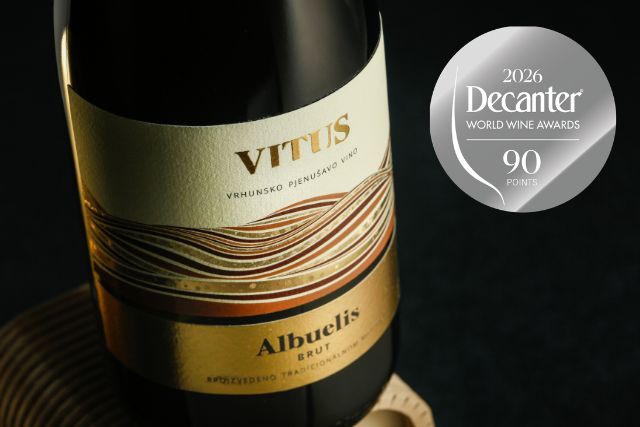
Harvest at Vitus winery is the time when all paths meet, in the vineyard and in the cellar - from vine to glass. And every time you open a bottle, that autumn, that morning, and those hands are there within it.