What Grows Around the Winery: The Story of a Park Coming Back to Life
Around Vitus Winery, we are creating an arboretum inspired by the natural habitat of a woodland edge, centred around a century-old bald cypress and the trees that remain from the former manor park.
Before a winery opens, most of the attention usually goes to what is happening inside the building - the cellar, the wine shop, the tasting room and the guest rooms. All of these have their time and place, but what is happening outside Vitus Winery deserves a story of its own.
Before guests even enter the tasting room, they will walk through something we are developing slowly and deliberately: an arboretum that grows out of the vegetation that has been present here for more than a century.
A Place with a Life Older Than the Winery
The Vitus estate in Mirkovec stands on a site whose history reaches much further back than the winery itself. Some of the trees that tower over the estate today have survived from the park that once surrounded the manor located here more than a century ago.
European yew, beech, maple, field maple, sessile oak, several lime trees and black locusts - these monumental trees were not planted by us. They were here to welcome us. Our task is to preserve them and give them company.
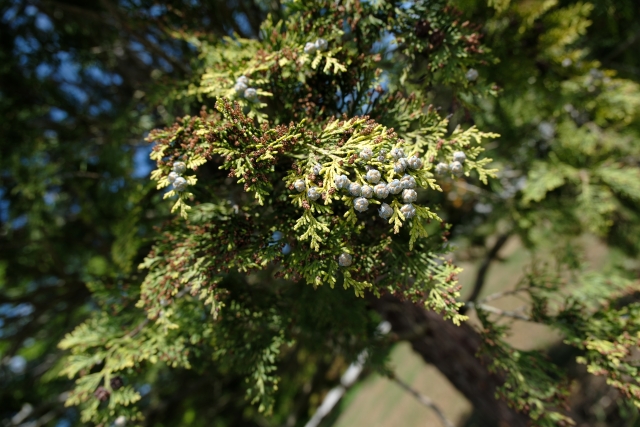
A particularly important place among them belongs to the bald cypress (Taxodium distichum), a species native to the wetlands of south-eastern North America that has stood on this estate for at least a hundred years.
We do not know who planted it, nor why someone decided to bring a tree from Louisiana to a 19th-century park in Zagorje. We only know that it survived and that today it is one of the oldest witnesses to the history of this place.
A Woodland-Edge Habitat: What Does That Mean?
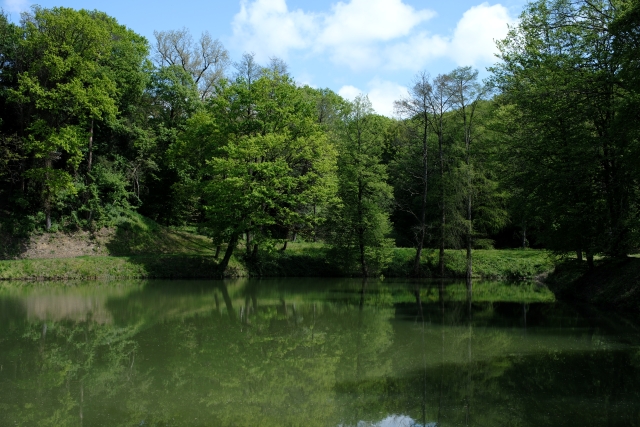
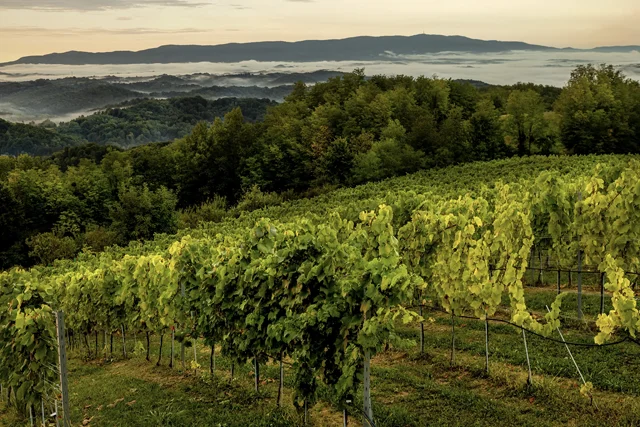
Our approach to landscaping was guided not by aesthetics alone, but by the logic of the site. The estate lies beside a forest before gradually opening into more exposed terrain. In ecology, this is known as a woodland-edge habitat: a transitional zone between enclosed woodland and open countryside.
The woodland edge is one of the richest habitats in Central Europe. Plant and animal species from two different environments overlap here, creating a space rich in flowering plants, birds and insects.
Rather than imposing a decorative garden that would compete with the site, we decided to build on what already grows here. Woodland cyclamens and bellflowers form the ground layer, while deciduous trees bring a distinctive palette of autumn colours. Every additional species is selected because it belongs in this context or is ecologically compatible with it.
What Are We Planting and Why?
We are complementing the existing monumental trees with species that will gradually leave their own mark on the landscape as they grow:
- Ginkgo (Ginkgo biloba) - a tree whose leaves turn an almost luminous yellow in autumn. Its lineage reaches back more than 200 million years, which is why it is often described as a living fossil.
- Drummond’s maple (Acer rubrum ‘Drummondii’) and red maple - the maple associated with the Canadian flag, with leaves that move through shades of orange and red in October.
- Black maple and other members of the genus Acer - connecting the newly planted species with the native field maples and other maples already growing on the estate.
- Northern red oak (Quercus rubra) - a North American relative of our sessile oak, with leaves that take on the colour of young wine in autumn.
- American sweetgum (Liquidambar styraciflua) - a tree whose autumn foliage moves through an entire spectrum, from yellow and red to deep purple, sometimes all on the same branch.
- Tulip tree (Liriodendron tulipifera) - a tree that produces tulip-shaped flowers in spring, from which it takes its name.
- Black locust, which already grows on the estate and will be supplemented with new trees -bringing late-spring blossom, fragrance and food for bees.
The entire collection has been designed to give the estate a different appearance in every season.
In spring, cyclamens, bellflowers and tulip trees come into bloom. Summer brings dense green foliage. Throughout October and November, the autumn palette transforms the estate into something that is difficult to capture in a single photograph. In winter, the structure of the bare tree crowns reveals the architecture of the winery.
Why This Matters to Us
A winery dedicated to indigenous grape varieties naturally thinks about the broader context: the soil, the habitat and everything that grows around the vineyard and the cellar.
The vine does not exist in isolation. A healthy environment around the winery is not simply decorative. It is part of the same philosophy that guides us in the vineyard: working with the place rather than against it.
The woodland edge on the estate also means preserving space for wild species: nesting birds, pollinating insects and the small animals that belong to this part of Zagorje.
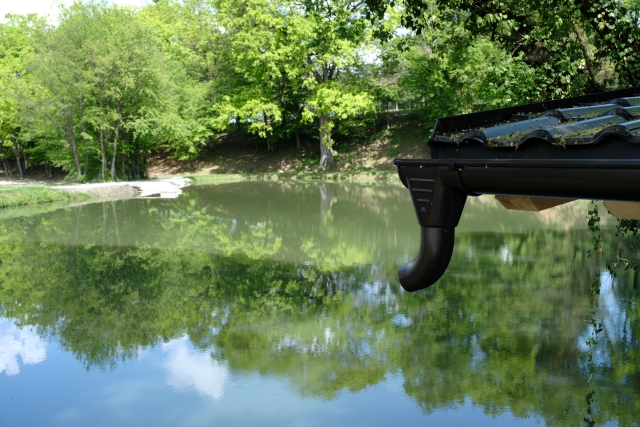
The arboretum is not an enclosed area filled with ornamental trees. It is part of a living whole that also includes the lakes, the meadow and the vineyard.
What You Will See When You Visit
When you visit us this summer, let a walk through the estate be as much a part of the reason for coming as the tasting in the cellar.
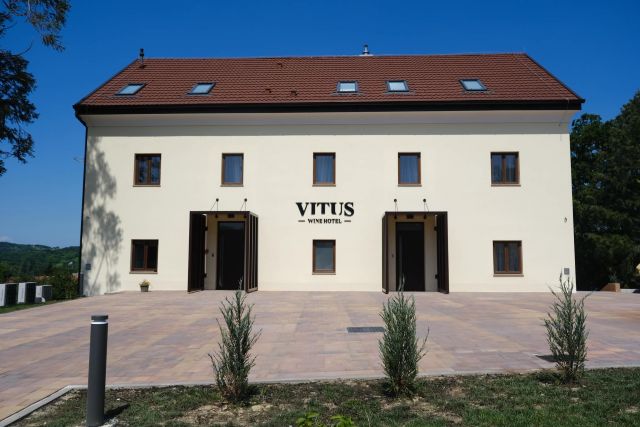
The bald cypress stands immediately beside the building. Take a moment to see how large it has grown for a tree that took root here before the Second World War. The younger trees, planted over the past few seasons, do not yet dominate the landscape. In another decade, they will.
The arboretum is not a project that will be completed on the winery’s opening day. It will continue to grow long after us - and that is what makes it so similar to everything else at Vitus.